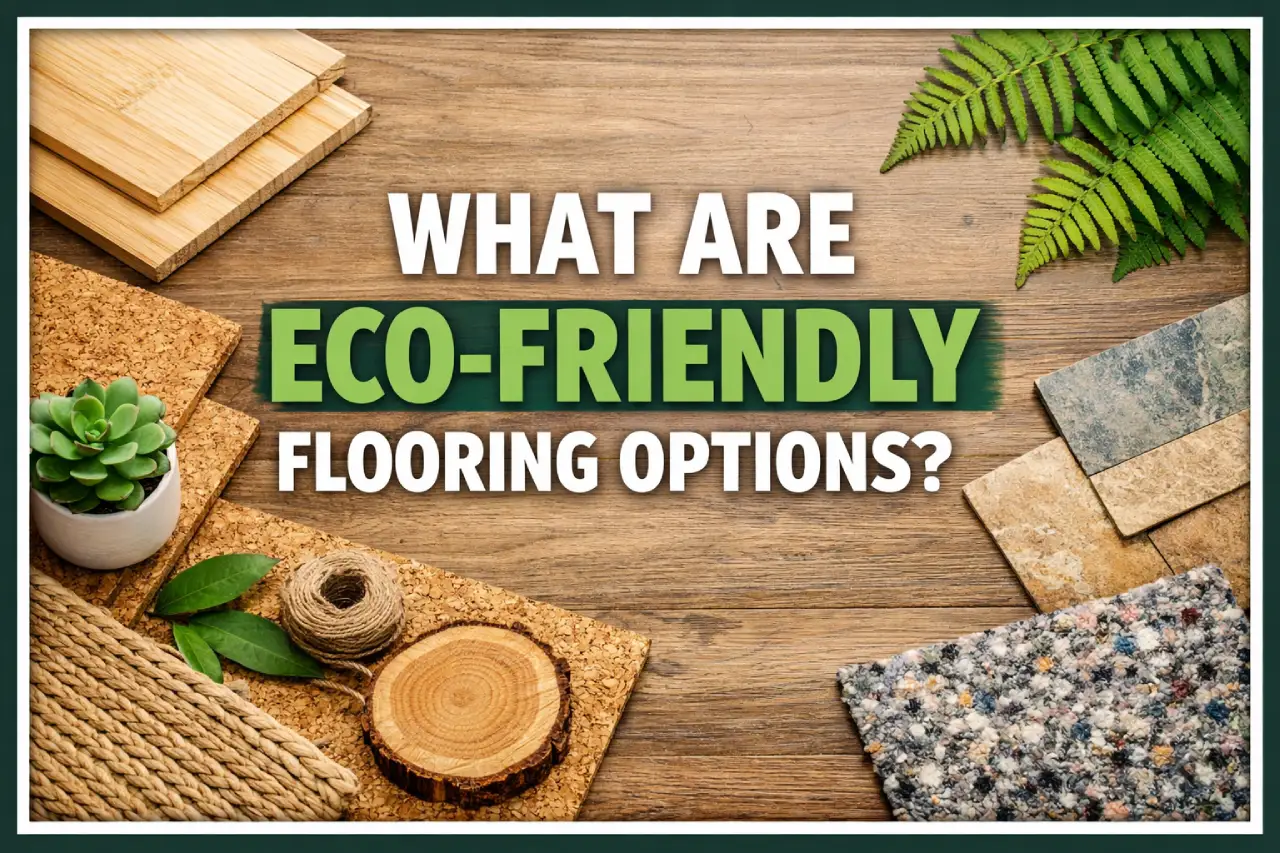
Eco-friendly flooring options are materials that are sustainably sourced, low in environmental impact, non-toxic, and often renewable or recyclable.
In simple terms, these are flooring choices that are better for both the planet and your indoor air quality.
If you’re remodeling your home or building from scratch, flooring is one of the biggest decisions you’ll make—not just visually, but environmentally. The right choice can reduce your carbon footprint, improve indoor health, and even increase long-term durability.
Let’s break down the best eco-friendly flooring options, how they compare, and how to choose the right one for your home.
What Makes Flooring “Eco-Friendly”?
Before diving into specific materials, it’s important to understand what qualifies as eco-friendly flooring.
A flooring material is generally considered sustainable if it meets several of these criteria:
- Made from renewable or recycled materials
- Harvested responsibly (without deforestation or ecosystem damage)
- Low in volatile organic compounds (VOCs)
- Durable and long-lasting
- Recyclable or biodegradable at the end of its life
Organizations like the U.S. Environmental Protection Agency (EPA) emphasize the importance of low-VOC materials for healthier indoor air.
With that in mind, let’s explore the best options.
1. Bamboo Flooring
Why It’s Eco-Friendly
Bamboo is one of the most popular sustainable flooring materials—and for good reason.
- It grows extremely fast (some species mature in 3–5 years)
- It regenerates without replanting
- It requires fewer resources than hardwood
Pros
- Durable and strong (especially strand-woven bamboo)
- Modern, clean appearance
- Comparable in price to traditional hardwood
Cons
- Quality varies widely
- Some products use adhesives with VOCs
- Not ideal for high-moisture areas
Best For
Living rooms, bedrooms, and areas with moderate foot traffic.
2. Cork Flooring
Why It’s Eco-Friendly
Cork comes from the bark of cork oak trees—and harvesting it doesn’t harm the tree.
- Bark regenerates naturally
- Trees can live and produce cork for decades
- Minimal environmental impact
Pros
- Soft and comfortable underfoot
- Naturally insulating (both thermal and sound)
- Resistant to mold and mildew
Cons
- Can be dented by heavy furniture
- Requires sealing to protect against moisture
- Fades in direct sunlight
Best For
Bedrooms, home offices, and spaces where comfort matters.
3. Reclaimed Hardwood Flooring
Why It’s Eco-Friendly
Reclaimed wood is sourced from old buildings, barns, or factories.
- No new trees are cut down
- Reduces waste
- Preserves natural resources
Pros
- Unique character and history
- Extremely durable
- High-end aesthetic
Cons
- Can be more expensive
- Limited availability
- Requires careful sourcing
Best For
Homes aiming for a rustic, vintage, or high-end look.
4. Engineered Hardwood (Sustainable Versions)
Why It’s Eco-Friendly
Engineered hardwood uses less solid wood than traditional hardwood.
- Thin layer of real wood on top
- Core made from recycled or fast-growing materials
When sourced responsibly (look for FSC certification), it can be a sustainable option.
Pros
- More stable than solid wood
- Works well in areas with humidity changes
- Looks like real hardwood
Cons
- Not all products are eco-friendly
- Limited refinishing compared to solid wood
Best For
Living spaces where you want the look of wood with added stability.
5. Linoleum Flooring (Not Vinyl)
Why It’s Eco-Friendly
True linoleum (not to be confused with vinyl) is made from natural materials like:
- Linseed oil
- Cork dust
- Wood flour
- Natural resins
Pros
- Biodegradable
- Long-lasting (can last decades)
- Naturally antimicrobial
Cons
- Requires proper installation
- Limited design compared to modern vinyl
- Can yellow over time if not exposed to light
Best For
Kitchens, hallways, and high-traffic areas.
6. Recycled Materials Flooring
Why It’s Eco-Friendly
Some flooring is made from recycled materials, such as:
- Recycled rubber
- Reclaimed plastic
- Recycled glass tiles
These options reduce landfill waste and give new life to existing materials.
Pros
- Highly durable
- Unique appearance
- Often water-resistant
Cons
- May not suit all design styles
- Quality varies by manufacturer
Best For
Gyms, basements, bathrooms, or creative interior designs.
7. Concrete Flooring (Polished)
Why It’s Eco-Friendly
Concrete can be eco-friendly when used as a finished floor rather than adding new materials.
- No additional flooring needed
- Extremely long lifespan
- Can incorporate recycled content
Pros
- Highly durable
- Low maintenance
- Modern, industrial look
Cons
- Hard and cold underfoot
- Requires sealing
- Not ideal for all home styles
Best For
Modern homes, basements, and open-plan spaces.
8. Natural Stone Flooring
Why It’s Eco-Friendly
Natural stone is a long-lasting material that doesn’t require synthetic production.
- Extremely durable
- Minimal processing compared to manufactured materials
Pros
- Timeless appearance
- Very long lifespan
- Adds property value
Cons
- Energy-intensive extraction and transport
- Can be expensive
- Cold underfoot
Best For
Entryways, kitchens, and bathrooms.
9. Carpet With Natural Fibers
Why It’s Eco-Friendly
Traditional carpets are often made from synthetic materials, but eco-friendly options use natural fibers like:
- Wool
- Jute
- Sisal
Pros
- Biodegradable
- Renewable materials
- Comfortable and warm
Cons
- Can be more expensive
- Requires regular maintenance
- May not be ideal for high-moisture areas
Best For
Bedrooms and cozy living spaces.
How to Choose the Right Eco-Friendly Flooring
With so many options, the best choice depends on your priorities.
Consider Your Lifestyle
- High-traffic home? Choose durable options like bamboo or concrete
- Want comfort? Cork or natural carpet works well
Think About Moisture Levels
- Bathrooms and kitchens need water-resistant materials
- Avoid cork or certain woods in high-moisture areas
Check Certifications
Look for labels like:
- FSC (Forest Stewardship Council)
- GREENGUARD (low emissions)
These help ensure the product meets environmental standards.
Balance Budget and Longevity
Some eco-friendly options cost more upfront—but last longer, saving money over time.
Common Mistakes to Avoid
Confusing Vinyl With Linoleum
Vinyl is petroleum-based and not eco-friendly. Linoleum is natural and sustainable.
Ignoring Adhesives and Finishes
Even eco-friendly flooring can become less sustainable if installed with high-VOC adhesives.
Focusing Only on Materials
Durability matters. A long-lasting floor is often more sustainable than one that needs frequent replacement.
Why Eco-Friendly Flooring Matters
Choosing sustainable flooring isn’t just about trends—it has real impact.
Better Indoor Air Quality
Low-VOC materials reduce harmful emissions inside your home.
Reduced Environmental Impact
Sustainable materials help conserve resources and reduce pollution.
Long-Term Value
Eco-friendly flooring often lasts longer and requires less maintenance.
Final Thoughts
So, what are eco-friendly flooring options?
They’re materials that balance sustainability, durability, and health—without sacrificing style.
From bamboo and cork to reclaimed wood and linoleum, there’s no shortage of options that look great and do good.
You don’t need to make the “perfect” choice. Just making a more informed, intentional decision can significantly reduce your environmental footprint.
And in a world where every choice adds up, that’s a step in the right direction.