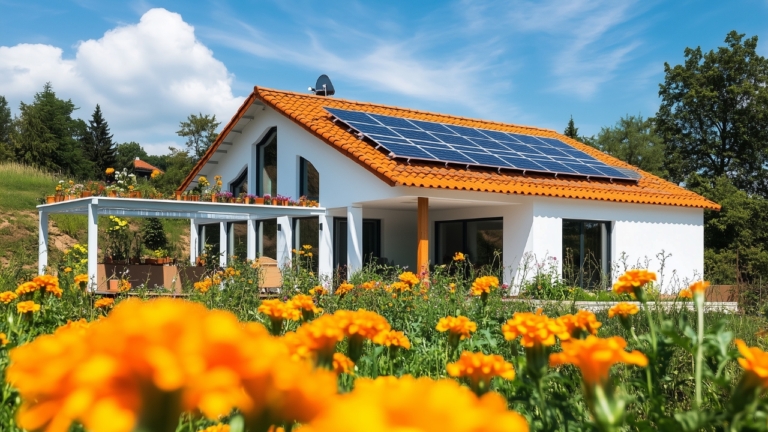
Key Takeaways
- Buildings account for 40% of total US energy consumption according to the Department of Energy
- LEED-certified buildings use 25% less energy and 11% less water than conventional buildings
- Eco-friendly architecture integrates passive design, renewable materials, and energy-efficient systems
- Green building standards are regulated by EPA’s Energy Star program and USGBC’s LEED certification
- Sustainable buildings can reduce operational carbon emissions by 35-50% compared to traditional construction
- The US green building market is projected to reach $224 billion by 2030
Table of Contents
- What Is Eco-Friendly Architecture?
- Core Principles of Sustainable Building Design
- US Green Building Certification Standards
- Passive Design Strategies
- Sustainable Building Materials
- Energy-Efficient Systems and Renewable Integration
- Water Conservation and Management
- Indoor Environmental Quality
- Site Selection and Land Use
- Lifecycle Environmental Assessment
- Frequently Asked Questions
What Is Eco-Friendly Architecture?
I define eco-friendly architecture—also called green architecture or sustainable building design—as an approach to construction that minimizes environmental impact throughout a building’s entire lifecycle, from material extraction through demolition. This design philosophy integrates energy efficiency, resource conservation, waste reduction, and occupant health into every decision.
The US Green Building Council (USGBC) established formal parameters for what constitutes sustainable architecture through their Leadership in Energy and Environmental Design (LEED) certification system. According to the Environmental Protection Agency (EPA), green buildings are designed to reduce the overall impact on human health and the natural environment by efficiently using energy, water, and other resources, while protecting occupant health and improving employee productivity.
The Environmental Context
I think it’s important to understand why eco-friendly architecture matters from a data perspective. The built environment contributes significantly to environmental degradation:
- Energy consumption: Buildings consume 40% of total US energy, according to the Department of Energy
- Carbon emissions: The building sector produces 38% of global CO₂ emissions when including construction materials
- Water usage: Residential and commercial buildings account for 13.6% of total US water withdrawals
- Material consumption: Construction generates 600 million tons of debris annually in the United States
- Land impact: Urban development consumes approximately 2 million acres of undeveloped land per year in the US
Eco-friendly architecture addresses each of these impact areas through intentional design choices, material selection, and operational strategies.
Core Principles of Sustainable Building Design
I’ve identified seven fundamental principles that guide eco-friendly architectural practice. These aren’t arbitrary preferences—they’re evidence-based approaches that measurably reduce environmental impact.
1. Energy Efficiency and Conservation
The primary principle focuses on minimizing energy consumption through superior building envelope design, high-performance insulation, and strategic orientation. Buildings designed to EPA Energy Star standards use 35% less energy than those meeting standard building codes.
Energy efficiency extends beyond operational consumption to include embodied energy—the total energy required to extract, process, manufacture, and transport building materials. I recommend evaluating both operational and embodied energy when assessing a building’s true environmental cost.
2. Resource Conservation
This principle emphasizes using materials efficiently, selecting renewable or rapidly renewable resources, and incorporating recycled content. The EPA’s Comprehensive Procurement Guidelines (CPG) designate specific recycled-content products that federal agencies must purchase, providing reliable benchmarks for sustainable material selection.
3. Water Efficiency
Water conservation in green buildings targets both indoor consumption and outdoor irrigation. The EPA’s WaterSense program establishes performance criteria for water-efficient fixtures and appliances. Buildings incorporating WaterSense-labeled products typically reduce water consumption by 20-30%.
4. Indoor Environmental Quality
I prioritize occupant health as a core sustainability metric. This includes controlling indoor air pollutants, maximizing natural daylight, ensuring acoustic comfort, and using low-VOC (volatile organic compound) materials. The EPA’s Indoor airPLUS certification specifically addresses indoor air quality in residential construction.
5. Site Sustainability
Responsible site selection and development minimize ecosystem disruption, reduce urban heat island effects, and manage stormwater on-site. This principle aligns with EPA Clean Water Act regulations regarding stormwater management.
6. Materials Selection
Sustainable material choices consider extraction impact, manufacturing processes, transportation distances (reducing embodied carbon), durability, recyclability, and end-of-life disposal. I evaluate materials using Environmental Product Declarations (EPDs) that quantify environmental impacts across the lifecycle.
7. Waste Reduction
Construction waste management targets diversion rates of 75% or higher through recycling and salvage. During operation, buildings should facilitate recycling and composting through dedicated spaces and systems.
💡 Important Distinction
I want to clarify that “eco-friendly” and “energy-efficient” aren’t synonymous. A building can be highly energy-efficient while using materials with terrible environmental profiles, or it might use sustainable materials but operate inefficiently. Comprehensive eco-friendly architecture addresses both.
US Green Building Certification Standards
I recommend understanding the major certification systems that define and verify sustainable building practices in the United States. These aren’t just marketing badges—they represent measurable performance standards with third-party verification.
LEED (Leadership in Energy and Environmental Design)
Administered by the USGBC, LEED is the most widely recognized green building certification globally. The system uses a point-based framework across several categories:
- Sustainable Sites (location and transportation impact)
- Water Efficiency (indoor and outdoor water use)
- Energy and Atmosphere (energy performance and renewable energy)
- Materials and Resources (material selection and waste management)
- Indoor Environmental Quality (air quality, lighting, thermal comfort)
- Innovation (exceptional performance and innovative strategies)
- Regional Priority (location-specific environmental priorities)
Buildings earn Certified, Silver, Gold, or Platinum ratings based on total points achieved. I’ve observed that LEED Platinum buildings typically achieve 40-50% energy savings compared to baseline code compliance.
Energy Star Certification
The EPA’s Energy Star program certifies buildings that perform in the top 25% of similar buildings nationwide for energy efficiency. This certification focuses specifically on operational energy performance using actual utility data. Energy Star certification requires a minimum score of 75 on the EPA’s 1-100 scale.
Living Building Challenge
The International Living Future Institute administers this rigorous performance-based standard. Buildings must demonstrate net-positive energy, water, and waste performance over 12 months of operation. I consider this the most demanding green building certification available.
Passive House (PHIUS)
The Passive House Institute US (PHIUS) certifies buildings meeting strict energy performance criteria. Passive House buildings typically use 60-70% less heating and cooling energy than conventional buildings through superior insulation, air tightness, and heat recovery ventilation.
Green Globes
Administered by the Green Building Initiative, this certification offers an alternative to LEED with a simplified online assessment process. The system rates buildings on a 1000-point scale across similar environmental categories.
⚠️ Certification Considerations
I need to point out that green building certification involves significant costs—typically $15,000 to $100,000+ depending on project size and certification level. Certification verifies performance but isn’t mandatory to build sustainably. Many excellent eco-friendly buildings operate without formal certification.
Passive Design Strategies
I emphasize passive design as the foundation of eco-friendly architecture because it uses building orientation, form, and materials to naturally regulate temperature, lighting, and ventilation—minimizing mechanical system dependence.
Solar Orientation and Building Form
In the United States, optimal building orientation places the long axis east-west, with major glazing on the south facade. This maximizes passive solar heat gain in winter (when the sun is lower) while allowing roof overhangs to shade windows in summer (when the sun is higher).
The specific overhang depth calculation depends on latitude. I use this formula: overhang depth = window height ÷ tan(altitude angle at summer solstice). For a building at 40°N latitude (Philadelphia, Denver), this typically results in overhangs extending 24-30 inches beyond south-facing windows.
Natural Ventilation
Strategic window placement enables cross-ventilation, using pressure differences to move air through spaces without mechanical systems. I design for natural ventilation by:
- Positioning operable windows on opposite walls to create airflow paths
- Locating inlet windows lower and outlet windows higher to leverage stack effect (warm air rises)
- Sizing openings to achieve 4-6 air changes per hour during shoulder seasons
- Orienting openings perpendicular to prevailing winds for maximum effectiveness
EPA research indicates that natural ventilation can reduce cooling energy by 30-50% in appropriate climates when properly designed.
Thermal Mass
Materials with high thermal mass—concrete, brick, stone—absorb heat during the day and release it at night, moderating temperature swings. In climates with significant diurnal temperature variation (20°F+ difference between day and night), thermal mass reduces heating and cooling loads by 15-25%.
The effectiveness depends on proper placement. I position thermal mass where it receives direct sunlight in heating-dominated climates, or shield it from direct sun in cooling-dominated climates to prevent heat accumulation.
Daylighting
Maximizing natural light reduces electricity consumption while improving occupant well-being. The Illuminating Engineering Society (IES) recommends daylight autonomy of 50% or greater—meaning spaces receive adequate natural light for at least half of occupied hours.
I achieve effective daylighting through:
- Window sizing and placement: Windows positioned higher on walls distribute light deeper into spaces
- Light shelves: Horizontal surfaces that bounce daylight onto ceilings, increasing penetration depth
- Clerestory windows: Upper-level windows that illuminate interior spaces while maintaining privacy
- Skylights and light tubes: Vertical daylighting for interior rooms without exterior walls
- Light-colored interior surfaces: Reflective finishes (70-85% light reflectance) maximize daylight distribution
Sustainable Building Materials
I evaluate building materials across multiple environmental criteria, not just a single “green” attribute. The most sustainable choice depends on specific project conditions, climate, and performance requirements.
Rapidly Renewable Materials
These materials regenerate within 10 years or less, according to LEED criteria:
- Bamboo: Grows to harvestable maturity in 3-5 years. Compressive strength comparable to concrete, tensile strength exceeds steel when processed into structural products
- Cork: Harvested from bark every 9 years without killing trees. Excellent thermal and acoustic insulation properties (R-value approximately 3.6 per inch)
- Linoleum: Made from linseed oil, wood flour, and natural resins. Biodegradable and naturally antimicrobial
- Straw: Agricultural byproduct with R-values of 1.5-2.0 per inch when used in straw bale construction
Recycled Content Materials
The EPA’s CPG program designates products with verified recycled content:
- Recycled steel: Structural steel contains 90%+ recycled content. Manufacturing recycled steel uses 75% less energy than virgin steel production
- Fly ash concrete: Replacing 15-30% of Portland cement with fly ash (coal combustion byproduct) reduces embodied carbon by 15-30%
- Recycled glass aggregates: Crushed recycled glass substitutes for sand and gravel in concrete, countertops, and insulation
- Cellulose insulation: Made from 80%+ recycled newspaper with R-value of 3.6-3.8 per inch
Locally Sourced Materials
LEED awards points for materials extracted, harvested, or manufactured within 500 miles of the project site, reducing transportation emissions. I prioritize local materials when they don’t compromise performance or durability.
Low-Embodied Carbon Materials
Embodied carbon represents total greenhouse gas emissions from material extraction through manufacturing. I compare materials using Environmental Product Declarations (EPDs):
- Cross-laminated timber (CLT): 25-50 kg CO₂e per cubic meter (carbon-negative when including biogenic sequestration)
- Concrete: 300-400 kg CO₂e per cubic meter for standard mixes
- Steel: 1,800-2,500 kg CO₂e per cubic meter
- Brick: 400-600 kg CO₂e per cubic meter
Durable Materials
I emphasize durability as a sustainability factor because longer-lasting materials reduce replacement frequency and associated environmental impacts. The Service Life Prediction methodology (ASTM E632) helps estimate material longevity:
- Metal roofing: 40-70 years
- Fiber cement siding: 50-100 years
- Brick masonry: 100+ years
- Concrete foundations: 50-100 years
- Cedar siding (properly maintained): 30-60 years
💡 Material Selection Strategy
I recommend prioritizing materials in this order: (1) durability, (2) low embodied carbon, (3) recycled content, (4) local sourcing, (5) rapidly renewable. A durable conventional material often has lower lifecycle impact than a “green” material requiring frequent replacement.
Energy-Efficient Systems and Renewable Integration
I design mechanical, electrical, and plumbing systems to minimize energy consumption while maintaining comfort and functionality.
HVAC Systems
High-efficiency heating, ventilation, and air conditioning systems reduce the largest component of building energy use:
- Heat pumps: Air-source heat pumps achieve 300-400% efficiency (coefficient of performance 3-4), meaning they transfer 3-4 units of heat for every 1 unit of electricity consumed. Ground-source (geothermal) heat pumps reach 400-600% efficiency
- High-efficiency furnaces: ENERGY STAR certified furnaces achieve 90%+ Annual Fuel Utilization Efficiency (AFUE) compared to 80% for standard models
- Variable refrigerant flow (VRF): Commercial systems that vary refrigerant flow based on demand, reducing energy consumption 30-40% compared to conventional systems
- Energy recovery ventilation (ERV): Transfers heat and moisture between incoming and outgoing air streams, recovering 70-80% of thermal energy
Renewable Energy Systems
On-site renewable generation reduces or eliminates reliance on grid electricity:
Photovoltaic (PV) solar panels: Current commercial solar panels achieve 18-22% efficiency. A typical residential installation (6-8 kW) produces 7,500-10,000 kWh annually in favorable US locations, offsetting 50-100% of household electricity consumption.
The Federal Investment Tax Credit (ITC) currently provides a 30% tax credit for solar installations through 2032, significantly improving financial viability. State-level incentives and net metering programs (available in 38 states) further enhance economics.
Solar thermal systems: These systems heat water directly using solar collectors. Properly sized solar water heating systems provide 50-80% of domestic hot water needs in most US climates.
Small wind turbines: In locations with average wind speeds of 10+ mph, residential wind turbines (5-15 kW) can generate 8,000-15,000 kWh annually. However, I find solar more cost-effective in most residential applications due to lower installation costs and fewer maintenance requirements.
Lighting Systems
LED technology has revolutionized lighting efficiency:
- LED efficiency: 80-100 lumens per watt compared to 10-17 for incandescent and 50-70 for fluorescent
- Lifespan: 25,000-50,000 hours versus 1,000 for incandescent and 10,000 for fluorescent
- Energy savings: LEDs use 75-85% less energy than incandescent bulbs for equivalent light output
I specify lighting controls (occupancy sensors, daylight sensors, timers) to reduce consumption an additional 20-30% beyond fixture efficiency improvements.
Appliances and Equipment
ENERGY STAR certified appliances meet EPA efficiency standards:
- Refrigerators: 9-10% more efficient than federal standards
- Dishwashers: 12% more energy efficient, 30% more water efficient
- Clothes washers: 25% more energy efficient, 33% more water efficient
- Water heaters: Heat pump water heaters are 200-300% more efficient than standard electric resistance models
Water Conservation and Management
I implement water efficiency strategies across supply, use, and disposal.
Indoor Water Efficiency
EPA WaterSense fixtures reduce consumption without compromising performance:
- Toilets: WaterSense toilets use 1.28 gallons per flush (gpf) or less, compared to 1.6 gpf federal standard and 3.5-7 gpf for older toilets. This saves 13,000+ gallons per year for a family of four
- Showerheads: WaterSense models deliver 2.0 gallons per minute (gpm) or less versus 2.5 gpm standard, saving 2,700 gallons annually per household
- Faucets: 1.5 gpm maximum for bathroom faucets (versus 2.2 gpm standard) saves 700+ gallons annually per faucet
- Washing machines: ENERGY STAR washers use 13 gallons per load compared to 23 for conventional models
Outdoor Water Management
Landscape irrigation accounts for 30-60% of residential water consumption in many regions. I reduce this through:
- Native and drought-tolerant plants: Species adapted to local conditions require minimal supplemental irrigation once established
- Drip irrigation: 90% efficiency versus 50-70% for conventional sprinklers
- Smart irrigation controllers: Weather-based systems adjust watering based on precipitation, temperature, and evapotranspiration rates, reducing outdoor water use 20-50%
- Rainwater harvesting: Collecting roof runoff for irrigation. A 2,000 square foot roof collects approximately 1,200 gallons per inch of rainfall
Stormwater Management
EPA Clean Water Act Section 402 regulates stormwater discharge from construction sites over one acre. I incorporate low-impact development (LID) strategies:
- Permeable paving: Allows infiltration, reducing runoff volume 50-100% compared to impervious surfaces
- Rain gardens and bioswales: Vegetated depressions that filter and absorb stormwater, removing 70-90% of pollutants
- Green roofs: Retain 40-80% of precipitation (varying by depth and climate), reducing runoff and providing insulation
- Cisterns: Store stormwater for later use, reducing both runoff and potable water consumption
Greywater Systems
Greywater (from sinks, showers, washing machines) can be treated and reused for toilet flushing or irrigation. State regulations vary significantly—California, Arizona, and New Mexico have established comprehensive greywater codes, while other states have more restrictive requirements.
I’ve found greywater systems reduce potable water consumption 25-40% in residential applications. However, installation costs ($5,000-$15,000) and maintenance requirements limit widespread adoption.
Indoor Environmental Quality
I prioritize occupant health and comfort as essential components of sustainable design. The EPA estimates Americans spend 90% of their time indoors, making indoor environmental quality critical to health.
Indoor Air Quality
The EPA’s Indoor airPLUS program establishes construction specifications addressing moisture control, HVAC design, and pollutant source control:
Ventilation: ASHRAE Standard 62.2 (Ventilation and Acceptable Indoor Air Quality in Residential Buildings) specifies minimum ventilation rates. I design mechanical ventilation to deliver 0.35 air changes per hour plus 15 cubic feet per minute (cfm) per occupant.
Source control: I specify low-VOC materials meeting the following emission limits:
- Paints and coatings: ≤50 g/L VOCs for flat finishes, ≤150 g/L for non-flat
- Adhesives: ≤70 g/L VOCs for most interior applications
- Carpets: Green Label Plus certification (≤0.5 mg/m³/hr total VOCs)
- Composite wood: California Air Resources Board (CARB) Phase 2 formaldehyde limits (≤0.09 ppm for plywood)
Moisture control: Preventing moisture accumulation inhibits mold growth. I maintain indoor relative humidity between 30-50% through proper ventilation, vapor barriers, and dehumidification when necessary.
Thermal Comfort
ASHRAE Standard 55 defines thermal comfort parameters. I design for operative temperatures of 68-76°F in winter and 73-79°F in summer, with relative humidity maintained below 60%.
Radiant heating systems provide superior comfort compared to forced air by heating surfaces rather than air, allowing comfortable conditions at lower air temperatures. This reduces energy consumption 10-30% while improving perceived comfort.
Acoustic Comfort
Sound transmission control improves livability and productivity. I specify:
- Exterior walls: STC (Sound Transmission Class) rating of 50+ for urban locations
- Interior partitions: STC 45-50 for privacy
- Floor-ceiling assemblies: IIC (Impact Insulation Class) rating of 50+ for multi-story construction
Natural Daylight and Views
Access to daylight and exterior views improves occupant well-being and productivity. Research in the journal Energy and Buildings found that office workers with window access took 6.5% fewer sick days and reported higher satisfaction.
I design for daylight access by providing windows within 25 feet of 75% or more of occupied spaces, targeting daylight factors of 2-5% (the ratio of interior to exterior illuminance).
Site Selection and Land Use
I consider site selection a fundamental sustainability decision that affects transportation patterns, ecosystem impact, and infrastructure requirements.
Smart Growth Principles
The EPA’s Smart Growth program promotes development that:
- Provides mixed-use development (residential, commercial, office) reducing vehicle trips
- Preserves open space and critical environmental areas
- Utilizes existing infrastructure rather than extending into undeveloped areas
- Offers transportation choices beyond single-occupancy vehicles
- Supports compact, walkable neighborhood design
Buildings located within 1/2 mile of public transit reduce household vehicle miles traveled by 20-40% according to Transportation Research Board data.
Brownfield Redevelopment
EPA brownfield programs provide grants and tax incentives for developing contaminated or underutilized sites. Redeveloping brownfields preserves greenfield sites while revitalizing communities.
I’ve worked on projects utilizing EPA Assessment Grants (up to $500,000) and Cleanup Grants (up to $500,000) to transform contaminated industrial sites into productive use.
Site Ecology
Minimizing ecosystem disruption requires careful site analysis:
- Habitat preservation: I delineate construction limits of disturbance, protecting existing vegetation and wildlife habitat
- Soil protection: Preserving topsoil prevents erosion and maintains fertility for vegetation establishment
- Tree preservation: Mature trees provide carbon sequestration (30-40 lbs CO₂ per year for a mature tree), stormwater management, and urban cooling
- Sensitive area avoidance: I avoid building in floodplains, wetlands, steep slopes, and habitats for threatened or endangered species
Heat Island Mitigation
Urban heat islands—where cities are 1-7°F warmer than surrounding areas—increase cooling energy demand. The EPA Heat Island Reduction Program recommends:
- Cool roofs: High-reflectance roofing (Solar Reflectance Index ≥78) reduces surface temperatures 50-60°F compared to dark roofs
- Cool pavements: Light-colored or permeable paving reduces heat absorption
- Shade trees: Strategic tree placement reduces cooling energy 15-35% through direct shading and evapotranspiration
- Green roofs: Vegetated roofs are 30-40°F cooler than conventional roofs during summer
Lifecycle Environmental Assessment
I evaluate buildings using lifecycle assessment (LCA) methodology, quantifying environmental impacts from material extraction through end-of-life disposal. The International Organization for Standardization (ISO) 14040 series establishes LCA procedures.
Lifecycle Phases
Building lifecycle assessment examines four phases:
- Product stage: Raw material extraction, transportation, and manufacturing
- Construction stage: Transportation to site, construction processes, and waste management
- Use stage: Building operation (energy, water), maintenance, repair, and replacement
- End-of-life stage: Deconstruction, transportation, waste processing, and disposal
Operational vs. Embodied Impact
Historically, operational energy dominated lifecycle impact—a typical building’s operational energy represented 80-90% of total lifecycle energy over 50 years. However, as buildings become more energy-efficient, embodied impacts grow in relative importance.
In high-performance buildings (Passive House standard or better), embodied energy can equal or exceed operational energy over the building’s lifetime. I therefore evaluate both comprehensively rather than focusing exclusively on operational efficiency.
Service Life Considerations
Building lifespan dramatically affects lifecycle impacts. A building designed for 100-year service life has half the embodied impact per year of use compared to a 50-year building, assuming similar construction.
I design for adaptability and durability to extend useful life:
- Flexible floor plans: Column grids and structural systems allowing interior reconfiguration
- Accessible building systems: Mechanical, electrical, and plumbing systems designed for maintenance and replacement
- Timeless design: Avoiding trendy aesthetics that may feel dated quickly
- Quality construction: Investing in superior materials and workmanship that resist degradation
Deconstruction Planning
Designing for disassembly enables material recovery at end-of-life. I specify:
- Mechanical fasteners rather than adhesives where feasible
- Modular components that can be removed intact
- Material separation (avoiding composite materials that can’t be recycled)
- Documentation of materials and assemblies to facilitate future deconstruction
Research indicates well-planned deconstruction recovers 70-90% of building materials by weight, compared to 20-30% for conventional demolition.
⚠️ Lifecycle Assessment Limitations
I want to note that LCA results depend heavily on assumptions about service life, maintenance intervals, energy sources, and end-of-life scenarios. Small changes in these assumptions can significantly alter conclusions. I use LCA to compare alternatives within consistent parameters rather than generating absolute environmental scores.
Frequently Asked Questions
How much does eco-friendly architecture cost compared to conventional construction?
I find that comprehensive green building adds 0-5% to construction costs for most projects when integrated from the design phase. The National Renewable Energy Laboratory analyzed 146 LEED buildings and found average cost premiums of 1.8% for LEED Certified, 2.1% for Silver, 1.8% for Gold, and 6.5% for Platinum.
However, lifecycle cost analysis reveals substantial operational savings. ENERGY STAR certified buildings save $0.50-$1.00 per square foot annually on utility costs. Over 20 years, this generates $10-20 per square foot in savings, far exceeding typical green building cost premiums.
Do eco-friendly buildings require more maintenance?
It depends on the systems. Some green technologies like photovoltaic panels require minimal maintenance (annual cleaning, occasional inverter replacement). Others like green roofs require regular maintenance similar to landscaping.
Overall, I’ve observed comparable or lower maintenance costs for green buildings because high-quality, durable materials reduce replacement frequency, and efficient systems experience less wear from reduced runtime.
Can existing buildings be retrofitted to meet green building standards?
Absolutely. The USGBC offers LEED for Existing Buildings certification specifically for operational improvements to occupied buildings. Common retrofits include:
- Upgrading to high-efficiency HVAC equipment (20-40% energy savings)
- Adding insulation and sealing air leaks (10-30% energy savings)
- Installing LED lighting and controls (50-75% lighting energy savings)
- Replacing windows with high-performance models (10-25% energy savings)
- Installing solar panels (offsetting 50-100% of electricity use)
- Upgrading to low-flow plumbing fixtures (20-30% water savings)
The EPA estimates that retrofitting existing buildings with proven energy-efficiency measures can reduce energy consumption 30% on average.
What climate zones are best suited for eco-friendly architecture?
I’ve designed sustainable buildings successfully in all US climate zones. However, optimal strategies vary by location:
- Hot-humid (Southeast): Prioritize dehumidification, shading, natural ventilation, and moisture control
- Hot-dry (Southwest): Emphasize thermal mass, night ventilation, evaporative cooling, and water conservation
- Cold (Northern states): Focus on superior insulation, air sealing, passive solar gain, and heat recovery ventilation
- Mixed-humid (Mid-Atlantic): Balance heating and cooling needs with seasonal shading, moisture management, and efficient HVAC
- Marine (Pacific Northwest): Prioritize moisture control, daylighting, and natural ventilation during mild seasons
Are eco-friendly buildings more comfortable to live or work in?
Research consistently demonstrates improved comfort and health in green buildings. Studies published in Building and Environment found:
- 27% reduction in sick building syndrome symptoms
- 51% reduction in respiratory health symptoms
- 6-16% improvement in worker productivity
- Higher thermal comfort satisfaction ratings
The superior insulation, air quality, and daylighting in eco-friendly buildings contribute to these improvements.
How do I verify that green building products are truly sustainable?
I recommend relying on third-party certifications rather than manufacturer claims:
- GREENGUARD Certified: Low chemical emissions (indoor air quality)
- FSC Certified: Responsibly harvested wood (Forest Stewardship Council)
- Cradle to Cradle: Comprehensive environmental and health assessment
- EPDs: Independently verified environmental data following ISO 14025
- ENERGY STAR: Energy efficiency for appliances and equipment (EPA)
- WaterSense: Water efficiency for plumbing fixtures (EPA)
These certifications require third-party testing and verification, providing reliable performance assurance.
Does eco-friendly architecture compromise aesthetics or design flexibility?
Not at all. Green building principles can enhance aesthetic quality through abundant natural light, connection to outdoors, and use of natural materials. The architectural expression is limited only by creativity—I’ve seen successful sustainable buildings ranging from traditional to ultra-modern styles.
Some strategies like solar orientation do influence building form, but skilled designers integrate these requirements seamlessly into compelling architecture.
What’s the payback period for renewable energy systems like solar panels?
Solar photovoltaic payback periods in the US currently range from 5-12 years depending on:
- Location: Solar resource quality (Southwest = shorter payback)
- Electricity rates: Higher rates = faster payback
- Incentives: Federal tax credit (30%), state rebates, net metering
- System size and cost: Larger systems typically have better economics per watt
With a 25-30 year system lifespan, solar panels generate positive returns for 13-25 years after payback. Energy savings can total $20,000-$50,000 over system lifetime for typical residential installations.
Are there health benefits to eco-friendly architecture beyond environmental impact?
Yes, substantial health benefits result from improved indoor environmental quality:
- Reduced respiratory issues: Low-VOC materials and superior ventilation decrease exposure to harmful chemicals and allergens
- Better sleep quality: Proper temperature control, fresh air supply, and noise reduction improve sleep
- Enhanced cognitive function: Research from Harvard’s T.H. Chan School of Public Health found cognitive scores 101% higher in green building environments
- Reduced stress: Natural daylight, views to nature, and thermal comfort reduce physiological stress markers
- Increased physical activity: Buildings near transit and pedestrian infrastructure encourage active transportation
How does eco-friendly architecture address extreme weather and climate change?
I design for resilience to increasingly frequent extreme weather events:
- Passive survivability: Buildings that maintain safe temperatures during power outages through superior insulation and thermal mass
- Flood resistance: Elevated first floors, flood vents, and water-resistant materials in flood-prone areas
- Storm resistance: Enhanced structural design, impact-resistant glazing, and secure roof attachments
- Drought tolerance: Water conservation and storage systems, drought-adapted landscaping
- Heat resilience: Passive cooling strategies, cool roofs, and backup power for essential cooling
The Federal Emergency Management Agency (FEMA) recognizes that resilient design reduces disaster recovery costs and improves community safety.