
A simple sympathy card can mean more than you realize. When someone is grieving, facing illness, or going through a difficult loss, even a few sincere words can offer comfort and remind them they are not alone.
Writing a sympathy card sounds simple until you actually sit down to do it. Then suddenly, every sentence feels too small, too awkward, or too formal. You want to be kind. You want to be sincere. You want your words to bring comfort instead of sounding empty. That pressure is exactly why so many people stare at a blank card for far too long.
The good news is this: you do not need to write something poetic or perfect. In most cases, the best sympathy message is one that does three things well. It acknowledges what happened, expresses genuine care, and gently reminds the person that they are not alone.
That may apply after the death of a loved one, but sympathy cards are not limited to bereavement. People also send them after divorce, miscarriage, job loss, a disaster, a painful diagnosis, financial hardship, and other life events that leave someone feeling shaken, heartbroken, or overwhelmed. A thoughtful note in those moments can matter more than most people realize.
This guide covers 23 real situations where a sympathy card is appropriate. For each one, you will find message examples that sound warmer, more personal, and more realistic than the usual one-line clichés. Use them as they are, combine parts of them, or adapt them to sound more like your own voice.
What to Include in a Sympathy Card
Before getting into specific examples, it helps to remember a simple formula. A strong sympathy card usually includes:
A brief acknowledgment of the loss or hardship.
A sincere expression of care, sorrow, or support.
A gentle offer of presence, help, prayer, love, or encouragement.
It also helps to keep your tone calm and genuine. You do not need to explain the situation, offer lessons, or rush someone toward healing. Sympathy cards work best when they make the other person feel seen.
1. Loss of a Parent

Losing a parent is one of life’s most profound emotional experiences. Parents shape our earliest memories, guide our values, and often remain a source of support throughout adulthood. When someone loses a parent, even the simplest message of sympathy can offer comfort during an incredibly painful time.
Here are thoughtful sympathy messages you can include in a card:
- I was so sorry to hear about your mother’s passing. Her warmth and kindness will be remembered by everyone who knew her.
- Your father clearly lived a meaningful life, and the love he gave your family will remain with you always.
- Please accept my heartfelt condolences as you grieve the loss of someone who helped shape your entire life.
- I hope the memories you shared with your mom bring moments of peace in the middle of this painful time.
- Your dad’s wisdom, humor, and steady presence will continue to live on in the stories and values he passed down.
- I know there are no perfect words for a loss like this, but I want you to know I am thinking of you.
- Your mother’s love is part of who you are, and that kind of love never truly leaves.
- I am holding you and your family close in thought as you remember your father and everything he meant to you.
- I hope you find comfort in the many beautiful memories that only a parent and child can share.
- Your mother made a lasting difference in the lives around her, and her memory will stay bright.
- Your father leaves behind a legacy that can be seen in the strength and character of his family.
- I am deeply sorry for your loss and am sending you love as you walk through these difficult days.
2. Loss of a Spouse or Partner

The loss of a spouse or life partner is one of the most deeply personal forms of grief. Partners share everyday routines, dreams, and years of memories together, which makes their absence especially difficult to process. A sympathy card in this situation should acknowledge the depth of that bond and offer gentle support.
Here are meaningful messages you can write to express your condolences:
- I am so sorry for the loss of your husband. The love you shared was obvious to everyone around you.
- Your wife was a beautiful person, and I know her absence will be deeply felt in every part of daily life.
- I cannot imagine how heavy these days must feel, but I hope you know you are surrounded by people who care.
- The life you built together mattered, and the love at the center of it will never be forgotten.
- Please accept my deepest sympathy as you grieve someone who was not only loved, but truly cherished.
- Your partner’s kindness, laughter, and spirit left a lasting impression on so many people.
- I hope you feel supported and gently held by those who care about you in the days ahead.
- Some losses change everything, and I am so sorry you are facing one of those losses now.
- The bond you shared was deeply special, and its memory will always carry meaning.
- I am thinking of you with real sympathy and wishing you moments of strength when you need them most.
- Your spouse’s love remains woven into your life in ways that time cannot erase.
- Please know I am keeping you in my thoughts and sending comfort with all my heart.
3. Loss of a Child

Few experiences are as heartbreaking as the loss of a child. Parents carry dreams, hopes, and a lifetime of love for their children, which makes this loss incredibly painful and difficult to express in words. A sympathy message here should focus on compassion, care, and quiet support.
Here are heartfelt sympathy messages you can include in a card:
- My heart aches for you and your family. I am so deeply sorry for the loss of your precious child.
- There are no words big enough for this sorrow, but I want you to know you are being held in love.
- Your child’s life, no matter how brief, mattered deeply and touched more hearts than words can say.
- I am thinking of you with tenderness and grief as you carry this unimaginable loss.
- Your little one will always be remembered with love, tenderness, and deep care.
- I hope you feel surrounded by compassion as you move through one heartbreaking day at a time.
- I am so sorry that your family is facing a pain no parent should ever have to know.
- The love you have for your child is everlasting, and so is the place they hold in your heart.
- Please know I am grieving with you and sending all the comfort I can.
- Your child brought light into the world, and that light will never be forgotten.
- I am keeping you and your family in my thoughts with the deepest sympathy.
- May love, memory, and gentle support carry you through the days ahead.
4. Loss of a Sibling

Siblings share a unique connection that grows through childhood, family experiences, and shared memories. Losing a brother or sister can feel like losing a part of your personal history. A sympathy card can help acknowledge that special bond and offer comfort during this difficult time.
Here are thoughtful messages you can write in a sympathy card:
- I am so sorry for the loss of your brother. A sibling’s place in the heart is unlike any other.
- Your sister shared your memories, your milestones, and so much of your story. I am deeply sorry for your loss.
- Losing someone who knew your life from the inside is an especially painful kind of goodbye.
- I hope the bond you shared with your sibling brings you comfort even as you grieve.
- Your brother will be remembered for the life he lived and the love he gave.
- Your sister’s laughter, spirit, and presence will continue to live on in the memories of those who loved her.
- I am holding you close in thought as you mourn someone who was both family and lifelong companion.
- A sibling’s love leaves a mark that can never be replaced. I am so sorry.
- I hope you find moments of peace in the stories and memories you shared together.
- Your brother’s memory will always remain part of your family’s foundation.
- Sending heartfelt sympathy as you grieve the loss of someone who was woven into every chapter of life.
- Please know I am thinking of you with compassion and care during this difficult time.
5. Loss of a Grandparent

Grandparents often hold a special place in the family, offering wisdom, warmth, and cherished traditions. Their presence can shape generations, and their loss can leave a deep emotional impact. A sympathy card can help honor their legacy while offering support to grieving family members.
Here are comforting sympathy messages you can include in your card:
- I am so sorry for the loss of your grandmother. Her love and presence will stay with your family always.
- Your grandfather sounds like someone who gave wisdom, steadiness, and warmth in equal measure.
- Grandparents leave behind more than memories. They leave traditions, stories, and love that keeps echoing.
- I hope remembering your grandparent brings comfort even in the middle of grief.
- Your grandmother clearly meant so much to your family, and her legacy will continue through all of you.
- I am thinking of you with sympathy as you say goodbye to someone so dearly loved.
- Your grandfather’s life was a gift to those around him, and his memory will be treasured.
- I know how special the bond with a grandparent can be, and I am truly sorry for your loss.
- May the stories, lessons, and love they shared continue to comfort you.
- Sending you heartfelt condolences as you remember a life so beautifully woven into your family.
- Your grandparent will always have a place in the hearts of those who knew and loved them.
- I hope you feel surrounded by love as you honor their memory.
6. Loss of a Friend

Friends become part of our chosen family, sharing laughter, support, and important moments throughout life. Losing a close friend can leave a deep emotional void. A sympathy message should recognize the importance of that friendship and offer sincere comfort.
Here are supportive messages you can write in a sympathy card:
- I am so sorry for the loss of your dear friend. Some friendships become part of the soul.
- Your friend clearly brought joy, loyalty, and real meaning into your life, and I know this hurts deeply.
- Losing a close friend is its own kind of heartbreak, and I am thinking of you with sympathy.
- I hope the memories you shared together bring warmth when the grief feels especially sharp.
- True friendship leaves a lifelong imprint, and your friend will not be forgotten.
- I know how much this friendship meant to you, and I am so sorry you are going through this.
- Your friend’s life mattered, and the love between you mattered too.
- I am keeping you in my thoughts as you grieve someone who was like family to you.
- The laughter, conversations, and years you shared will always remain part of your story.
- Please know I am thinking of you and sending comfort as you mourn this painful loss.
- A friend who truly understood you is never easy to lose. I am deeply sorry.
- May love, memory, and support surround you in the days ahead.
7. Loss of a Pet

For many people, pets are beloved family members who offer unconditional love and companionship. Losing a pet can be deeply emotional and surprisingly difficult. A thoughtful sympathy message can acknowledge that bond and show understanding for the grief someone is experiencing.
Here are compassionate messages you can write in a sympathy card:
- I am so sorry for the loss of your beloved pet. That kind of companionship is deeply special.
- Your pet was clearly loved beyond measure, and that love gave them a beautiful life.
- Losing such a loyal companion leaves a quiet ache that is very real and very painful.
- I hope the happy memories you shared bring comfort as you grieve this loss.
- Your pet was lucky to be so cherished, and you were lucky to be loved so faithfully in return.
- The bond between you and your companion was beautiful, and I know how much this hurts.
- I am thinking of you as you say goodbye to a friend who brought comfort, joy, and unconditional love.
- Pets leave behind routines, memories, and little spaces that suddenly feel enormous. I am so sorry.
- Your furry friend may be gone, but the love you shared will stay with you always.
- I know this loss is deeply personal, and I am sending you heartfelt sympathy.
- Thank you for loving your pet so well. That kind of devotion matters more than words can say.
- Wishing you comfort as you remember all the joy and companionship they brought into your life.
8. Serious Illness Diagnosis

Receiving a serious illness diagnosis can be overwhelming and emotionally draining. During this time, supportive words can remind someone that they are not alone in their journey. A sympathy card can provide encouragement, strength, and reassurance.
Here are supportive messages you can include in a card:
- I was sorry to hear about your diagnosis, and I want you to know I am thinking of you with real care.
- You are facing something difficult, and I hope you feel surrounded by strength, support, and love.
- Please know you do not have to carry this season alone. So many people are standing with you.
- I am sending you steady encouragement and hoping each day brings a little more comfort.
- You have every right to feel whatever you are feeling right now, and I am here for you.
- I know this news must feel overwhelming, and I hope you are met with gentleness at every step.
- Wishing you courage for the hard days and peace in the middle of uncertainty.
- I am keeping you in my thoughts and hoping for healing, rest, and good care.
- You are stronger than you should have to be, and I admire your courage through this.
- Sending love and encouragement as you face treatment, waiting, and all the unknowns in between.
- I hope you feel supported not only medically, but emotionally, by the people who care about you.
- Please know I am thinking of you often and wishing you comfort in every possible form.
9. Loss of a Colleague

When someone loses a coworker or colleague, it can affect both their professional and personal life. Workplaces often become communities where people build strong relationships over time. A sympathy message should remain respectful while expressing genuine care.
Here are thoughtful sympathy messages appropriate for this situation:
- Please accept my sincere condolences during this difficult time for you and your family.
- I was saddened to hear of your loss and want to express my heartfelt sympathy.
- Your colleague was clearly respected and appreciated, and their absence will be felt.
- Thinking of you as you navigate both personal grief and the demands of daily life.
- Please know that many of us are keeping you in our thoughts during this painful time.
- I hope you feel supported by those around you as you move through the days ahead.
- Your coworker made a meaningful contribution, and they will be remembered with respect.
- I am deeply sorry for your loss and am sending sincere sympathy to you and your loved ones.
- Wishing you strength, comfort, and peace as you grieve someone important to you.
- May the memory of your colleague bring you pride, gratitude, and eventually some peace.
- Please accept my condolences and know that I am thinking of you with care.
- Sending respectful sympathy during this time of loss.
10. Loss of a Neighbor

Neighbors often share years of community, daily interactions, and friendly support. When someone in the neighborhood passes away, it can deeply affect those who lived nearby. A sympathy message from a neighbor can offer comfort and remind grieving families that their community cares.
Here are supportive messages you can write in a sympathy card:
- We are so sorry for your loss and are keeping your family in our thoughts.
- Your loved one will be remembered with kindness by everyone on this street.
- Please know your neighbors care about you and are thinking of you during this difficult time.
- It has been a privilege to know your family, and we are deeply sorry for what you are going through.
- Our hearts go out to you as you grieve someone who was part of this community.
- Sending sympathy from next door and wishing you comfort in the days ahead.
- Your loved one’s presence made a difference here, and they will be missed.
- We are holding you in thought and hoping you feel surrounded by support.
- There are no perfect words, only sincere ones, and ours are with you now.
- Please accept our heartfelt condolences as you move through this painful season.
- Your family is not alone in this neighborhood. We are thinking of you with care.
- Wishing you peace, strength, and moments of comfort as you remember your loved one.
11. Loss During the Holidays

Grief can feel even heavier during holidays when memories and traditions remind people of the loved ones they have lost. What is usually a joyful time can suddenly feel bittersweet or painful. A sympathy message during the holidays should acknowledge that emotional complexity with warmth and care.
Here are thoughtful messages you can share in a sympathy card:
- I know this season may feel especially heavy, and I want you to know I am thinking of you.
- Holidays can make loss feel louder, and I am so sorry you are carrying that pain right now.
- Sending you warmth and gentle thoughts as you miss someone deeply this holiday season.
- I hope you give yourself permission to move through these days however you need to.
- The absence of someone loved can be felt so strongly at this time of year. I am truly sorry.
- I am remembering your loved one with you and sending comfort through this difficult season.
- May familiar traditions and cherished memories bring at least a little peace.
- I know celebrations can feel different after loss, and I am holding you in my heart.
- Wishing you quiet moments of comfort in a season that may feel emotionally complicated.
- Your grief matters, even when the world seems busy telling everyone to be cheerful.
- Sending sympathy, love, and compassion as you make your way through the holidays.
- Please know you are not forgotten this season, and neither is the person you are missing.
12. Loss After a Long Illness

When someone passes away after a long illness, families often experience a mixture of grief, exhaustion, and reflection. They may have spent months or years caring for their loved one and navigating difficult emotions. A sympathy message can acknowledge both the loss and the strength it took to endure the journey.
Here are compassionate messages you can include in a sympathy card:
- I am so sorry for your loss after such a long and difficult journey.
- Your loved one was cared for with great devotion, and that love mattered every step of the way.
- I know this goodbye comes after so much hope, fear, fatigue, and tenderness. I am thinking of you.
- There may be grief, relief, exhaustion, and love all mixed together, and every part of that is valid.
- Your care and dedication through the illness spoke volumes about how deeply they were loved.
- I hope you find comfort in knowing your loved one was supported with compassion until the end.
- After such a long season of caregiving and waiting, I hope you are met with gentleness and rest.
- I am deeply sorry for your loss and for all your family has walked through.
- May memories of easier days and meaningful moments bring comfort as you grieve.
- This has been a long road, and I hope peace slowly finds its way to you.
- Your loved one’s struggle is over, but I know your sorrow is very real. I am sending heartfelt sympathy.
- Thinking of you with compassion as you carry both the pain of loss and the weight of all that came before it.
13. Loss of a Teacher or Mentor

Teachers and mentors shape lives through guidance, encouragement, and wisdom. Their influence often lasts long after their lessons are finished. A sympathy card can help honor their legacy while recognizing the impact they had on others.
Here are thoughtful messages you can write to express your sympathy:
- I am so sorry for the loss of someone who helped shape your life in such meaningful ways.
- A great teacher leaves lessons behind long after their voice is gone.
- Your mentor’s guidance clearly mattered deeply, and their influence will continue through those they helped.
- I am thinking of you as you remember someone who offered wisdom, encouragement, and direction.
- The best mentors leave more than advice. They leave confidence, perspective, and lasting impact.
- Your teacher’s legacy lives on in the many lives they encouraged and strengthened.
- I hope you find comfort in knowing how much good they brought into the world.
- Losing someone who helped guide your path is a painful kind of loss, and I am truly sorry.
- Their words, example, and generosity will continue to matter for years to come.
- I am holding you in thought as you grieve someone who gave so much to others.
- Your mentor may be gone, but the lessons they shared will remain part of your life.
- Sending heartfelt sympathy as you remember a life marked by influence, care, and purpose.
14. Infertility Struggles

Infertility can be a long and emotionally exhausting journey for many couples or individuals. The experience often includes hope, disappointment, and ongoing uncertainty. A sympathy message can provide comfort by recognizing the emotional weight of this struggle.
Here are supportive messages you can write in a card:
- I know this journey has been incredibly difficult for you, and I want you to know that I am thinking of you and sending my deepest support.
- I’m so sorry that you’re facing such a painful and uncertain road. Please know you don’t have to go through it alone.
- Infertility can be an emotional weight that many people don’t fully understand, but I want you to know that your feelings matter and I’m here for you.
- I admire the strength and courage you’ve shown through such a challenging experience, and I hope you feel surrounded by love and understanding.
- This journey can be exhausting in ways people don’t always see, and I’m truly sorry that you are carrying so much right now.
- Please know that your pain and hopes are completely valid, and I’m here whenever you need someone to listen.
- I’m thinking of you during this difficult chapter and wishing you moments of peace and comfort along the way.
- Sometimes words aren’t enough, but I want you to know that I care deeply and I’m here to support you however I can.
- I cannot fully understand everything you’re going through, but I care about you and want to walk beside you through this journey.
- Your strength during such a difficult experience is truly admirable, and I hope you feel surrounded by compassion and support.
- I’m keeping you in my thoughts and hoping that you feel the love and encouragement of those who care about you.
- Even when the path feels uncertain, please remember that your story, your hopes, and your feelings are deeply important.
15. Late Sympathy Messages

Sometimes people realize later that they want to send condolences but feel unsure if it is still appropriate. In reality, grief does not follow a timeline, and a sincere message is always meaningful. A late sympathy card can still bring comfort and show that someone is remembered.
Here are thoughtful messages you can write when sending condolences later:
- I know this message comes later than it should, but my sympathy is no less heartfelt.
- I have been thinking of you and wanted to reach out, even though time has passed.
- Loss does not stay neatly within a few days, and I wanted you to know you are still on my mind.
- I am sorry I did not write sooner, but I hope you can still feel the sincerity behind these words.
- Grief continues long after others stop asking about it, and I wanted to acknowledge that.
- I have been remembering your loved one and thinking of you with care.
- Even though this note is late, the compassion behind it is very real.
- I know the hardest days are not always the first ones, and I hope this message reaches you at the right time.
- Please accept my heartfelt sympathy, even though these words are arriving later than they should have.
- I did not want more time to pass without letting you know I am thinking of you.
- Your loss has not been forgotten, and neither have you.
- Sending warm thoughts and sincere sympathy as you continue to carry this grief.
16. Divorce or Separation

Divorce or separation can be emotionally overwhelming and deeply personal. It often involves grief, uncertainty, and major life changes. A supportive message can help someone feel understood and remind them that they are not alone during this transition.
Here are supportive messages you can write in a sympathy card:
- I am so sorry you are walking through such a painful and personal transition.
- Even when a separation is necessary, it can still bring real grief, and I want to acknowledge that.
- I know this season may feel confusing, exhausting, and emotional. Please know I am thinking of you.
- You do not have to pretend to be strong all the time. This is a hard thing to go through.
- I hope you feel supported as you take one step at a time through this new chapter.
- The end of a relationship can bring many losses at once, and I am sorry you are carrying that weight.
- I am here for you, whether you need a listening ear, practical help, or simply quiet company.
- You deserve peace, healing, and people who meet you with kindness right now.
- This moment may be painful, but it is not the whole story of your life.
- I hope that with time, this season gives way to clarity, strength, and steadier ground.
- Sending you compassion and support as you rebuild what life looks like from here.
- You are not alone in this, even on the days when it feels especially heavy.
17. Job Loss or Layoff
Losing a job can bring financial stress, uncertainty, and emotional disappointment. Many people tie their identity and stability to their work, which makes layoffs especially difficult. A sympathy message can offer encouragement and reassurance during this challenging time.
Here are supportive messages you can include in a card:
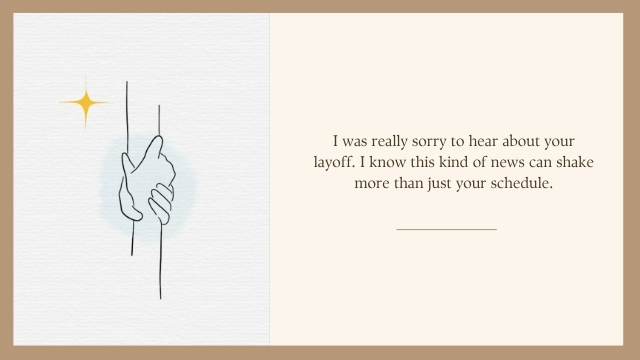
- I was really sorry to hear about your layoff. I know this kind of news can shake more than just your schedule.
- Losing a job can affect confidence as much as finances, and I hope you are being gentle with yourself.
- This setback does not erase your talent, experience, or value. Those things are still fully yours.
- I know this may be an uncertain time, and I am thinking of you with real care and encouragement.
- Your work ethic and skill have always been obvious, and I believe new doors will open for you.
- I am sorry you are dealing with this stress, especially when it was not something you chose.
- Please remember that difficult career moments happen to capable people too.
- I hope the next opportunity recognizes everything you bring to the table.
- If you need help networking, reviewing applications, or simply talking things through, I am here.
- This is a hard interruption, but it is not the end of your momentum or your potential.
- I believe your next chapter can still hold something meaningful, even if this one ended painfully.
- Sending support as you navigate the uncertainty and begin figuring out what comes next.
18. Miscarriage or Pregnancy Loss

Pregnancy loss can be deeply painful and often carries quiet grief that others may not fully understand. Parents may feel a mixture of sadness, shock, and loneliness during this experience. A compassionate message can acknowledge their loss and offer emotional support.
Here are thoughtful messages you can include in a sympathy card:
- I am so sorry for your loss. This grief is real, and it matters.
- There are no easy words for something so painful, but I want you to know I am holding you in my heart.
- Your loss deserves to be acknowledged with tenderness, love, and deep respect.
- I am thinking of you as you grieve a future that was already loved.
- Please know you do not have to explain your sorrow to anyone. It is valid exactly as it is.
- I am so sorry you are walking through this heartbreak, and I hope you feel surrounded by care.
- Pregnancy loss can feel incredibly lonely, and I want you to know you are not alone.
- I am sending gentle thoughts and sincere sympathy as you move through this difficult time.
- What you are feeling matters, and your grief does not need to fit anyone else’s expectations.
- I hope you receive the compassion, rest, and support you need in the days ahead.
- My heart goes out to you as you carry a loss that is both deeply personal and deeply painful.
- Please know I am thinking of you with love and sympathy.
19. Loss of a Home or Natural Disaster
Experiencing a house fire, flood, or natural disaster can be devastating. Losing a home means losing a place filled with memories, comfort, and security. A thoughtful sympathy message can offer encouragement and remind someone that support is available.
Here are compassionate messages you can include in a sympathy card:
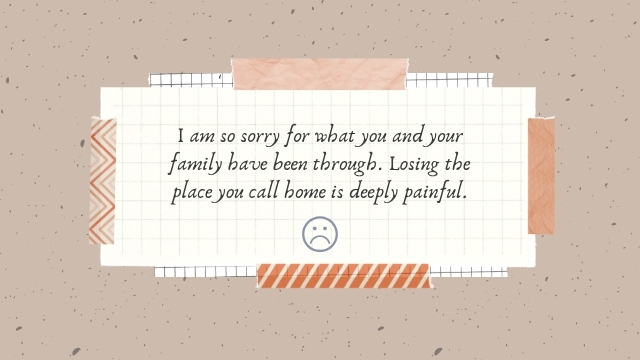
- I am so sorry for what you and your family have been through. Losing the place you call home is deeply painful.
- A disaster like this affects far more than belongings, and I am thinking of you with real compassion.
- Home is tied to comfort, safety, and memory, which makes this loss especially hard.
- I hope you feel supported by the people around you as you deal with the shock and aftermath.
- I am so sorry that so much changed so suddenly. You did not deserve this upheaval.
- Wishing you strength as you face the practical challenges and emotional weight of rebuilding.
- I hope help arrives in every form you need it, from shelter and supplies to patience and care.
- Even though this loss is overwhelming, I believe support and steadier days will come.
- I am thinking of you as you sort through what was lost and what can slowly be rebuilt.
- Please know that many people are holding you in their hearts right now.
- What happened was devastating, and I am truly sorry you are facing it.
- Sending heartfelt support as you move through this difficult and disruptive time.
20. Business Failure or Financial Hardship
Financial struggles or business setbacks can be deeply stressful and emotionally draining. People may feel disappointment, uncertainty, and worry about the future. A supportive message can offer encouragement and remind them that setbacks do not define their worth.
Here are supportive messages you can include in a card:
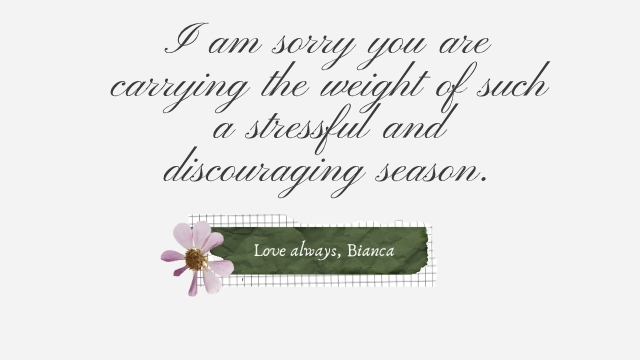
- I am sorry you are carrying the weight of such a stressful and discouraging season.
- Financial hardship can be exhausting in ways people do not always see, and I want to acknowledge that.
- I know this may feel heavy and humbling, and I hope you are met with understanding rather than judgment.
- Setbacks in business or money do not define your intelligence, effort, or worth.
- I am thinking of you with sympathy as you navigate difficult decisions and real pressure.
- I hope you remember that hard seasons can happen even to hardworking and capable people.
- What you are facing is difficult, and you deserve compassion while you move through it.
- I believe your resilience and experience will matter greatly in whatever comes next.
- Please know I am rooting for you and sending encouragement during this uncertain time.
- I am sorry things have become so hard, and I hope relief begins to find its way to you soon.
- Your future is still larger than this difficult chapter, even if it does not feel that way right now.
- Sending support and respect as you face this season one practical step at a time.
21. Major Surgery or Medical Recovery
Recovering from major surgery or medical treatment can be physically and emotionally challenging. During this time, kind words can provide encouragement and help someone feel supported. A sympathy message can offer hope, patience, and reassurance.
Here are thoughtful messages you can write in a card:
- I hope your surgery went smoothly and that your recovery is gentler than expected.
- Sending you warm thoughts as you rest, heal, and take things one day at a time.
- Recovery can be slower and harder than people realize, and I hope you are giving yourself grace.
- Wishing you patience for the healing process and strength for the difficult days.
- I am thinking of you and hoping each new day brings a little more comfort.
- May you feel well cared for, well supported, and not rushed as your body recovers.
- I know healing is not always a straight line, and I am sending encouragement for the road ahead.
- Please know I am thinking of you and hoping your recovery is steady and full.
- Wishing you rest, relief, and the kind of support that makes difficult days easier.
- I hope you are surrounded by people who help in practical ways and care in thoughtful ones.
- Sending love and encouragement as you regain strength in your own time.
- May your recovery bring not only healing, but also moments of calm and reassurance.
22. Mental Health Struggles
Mental health challenges can feel isolating, especially when someone feels misunderstood or unsupported. Compassionate words can make a meaningful difference by reminding someone that they are valued and not alone. A thoughtful sympathy message can offer encouragement and emotional support.
Here are caring messages you can include in a sympathy card:
- I know things may feel especially heavy right now, and I want you to know I care deeply.
- You do not have to hide your struggle to be worthy of support, rest, and compassion.
- I am thinking of you with gentleness and hoping you feel less alone today.
- Mental and emotional pain are real, and you deserve care that takes them seriously.
- Please remember that needing support is not weakness. It is part of being human.
- I am here for you, whether you want to talk, sit quietly, or simply know someone cares.
- I hope you meet yourself with the same patience and kindness you would offer someone else.
- You matter deeply, even on days when your own mind tries to tell you otherwise.
- I know this may be an exhausting season, and I am sending steady compassion your way.
- Your feelings are valid, and your struggle does not make you a burden.
- Wishing you moments of relief, honest support, and room to breathe.
- Please know you are not alone, and you do not have to carry everything by yourself.
23. Academic Failure or Disappointment
Academic setbacks can feel deeply personal because they often affect confidence, future plans, and self-worth all at once. Whether someone failed an exam, missed a major opportunity, or did not get the result they hoped for, the disappointment can feel heavy and isolating. A thoughtful message can offer encouragement while reminding them that one setback does not define their future.
Here are supportive messages you can include in a sympathy card:
- I am sorry this did not turn out the way you hoped. I know how disappointing that can feel.
- Academic setbacks can hit hard because they touch effort, identity, and future plans all at once.
- One result, one rejection, or one failed attempt does not define your intelligence or your future.
- I hope you give yourself time to feel disappointed without letting this moment speak for your whole story.
- I know you worked hard, and I am sorry the outcome did not reflect that effort.
- Sometimes a setback becomes a redirection, even if it feels painful before it feels useful.
- I am thinking of you with encouragement as you process this and figure out your next step.
- This chapter may feel discouraging now, but it does not erase your potential.
- You are still capable, still worthy, and still moving forward, even if the path looks different.
- I hope you are met with understanding, especially from yourself, in the days ahead.
- What happened was disappointing, but it is not the final word on what you can become.
- Sending support as you recover from this setback and begin again with fresh perspective.
Tips for Making Any Sympathy Message Feel More Personal
Once you find a message you like, you can make it more meaningful with one small detail. Mention the person’s name. Reference a memory. Acknowledge a quality you admired. Offer one specific form of help instead of saying, “Let me know if you need anything.” Even adding one honest sentence in your own voice can turn a nice message into a memorable one.
You can also adjust the tone depending on your relationship. For a close friend, warmer and more personal language usually feels right. For a coworker, neighbor, or acquaintance, a respectful and slightly simpler message often works better.
What Not to Write in a Sympathy Card
Even kind people can accidentally say things that feel minimizing. Try to avoid phrases that rush the person to “move on,” compare their grief to someone else’s, or explain the hardship in a way that dismisses their pain. It is usually better not to say things like “Everything happens for a reason,” “At least…,” or “I know exactly how you feel.”
When in doubt, choose honesty over explanation. A simple message like “I’m so sorry you’re going through this, and I’m thinking of you” is almost always better than a long attempt to make sense of someone else’s pain.
Final Thoughts
The best sympathy cards are not the fanciest ones. They are the ones that feel sincere, steady, and human. They make room for grief, disappointment, shock, or uncertainty without trying to fix it too quickly. They remind the reader that someone noticed their pain and cared enough to reach out.
Whether you are writing after a death, a divorce, a diagnosis, a layoff, a miscarriage, or another deeply difficult life event, your words do not need to be perfect to be comforting. They just need to be thoughtful and real.
Now here’s a simple question for you: when someone in your life is hurting, what kind of message would make them feel truly seen rather than merely politely acknowledged?