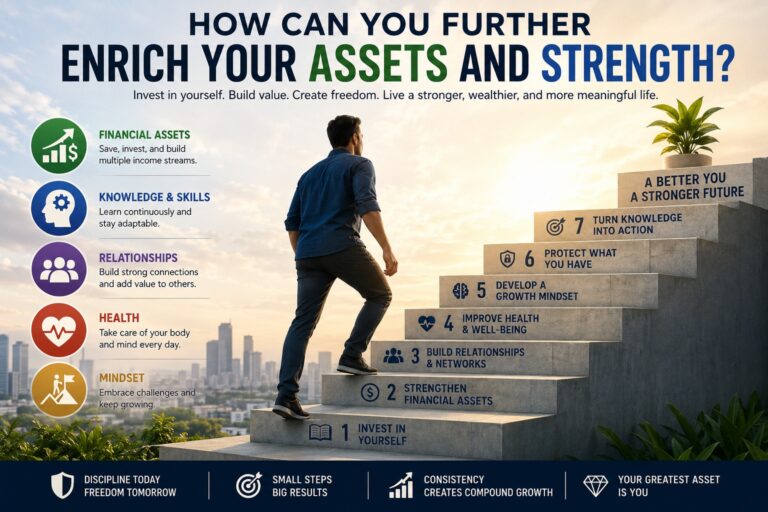
In today’s fast-moving world, building a better life requires more than simply earning money or collecting achievements. True long-term growth comes from continuously enriching both your assets and your strengths — financially, mentally, emotionally, and personally.
When many people hear the word “assets,” they immediately think about money. But real assets go far beyond finances. Knowledge, health, relationships, emotional resilience, creativity, and practical skills all contribute to a stronger and more meaningful life.
At the same time, strengths are the qualities and abilities that help people adapt, solve problems, and continue growing through different stages of life.
The encouraging part is that meaningful growth does not usually happen through massive overnight changes. More often, it’s built through small, intentional actions repeated consistently over time.
In this guide, we’ll explore practical ways to enrich your assets, strengthen your personal foundation, and create long-term value in everyday life.
What Does It Mean to Enrich Your Assets and Strength?
Enriching your assets and strengths simply means increasing your overall value and stability over time.
This can include:
- Improving financial security
- Expanding knowledge and expertise
- Building healthier habits
- Strengthening emotional resilience
- Developing meaningful relationships
- Creating opportunities for future growth
People who continuously invest in themselves often become more adaptable, confident, and prepared for unexpected challenges.
Rather than focusing only on short-term success, the goal is to build a stronger foundation that supports long-term well-being and sustainable growth.
Start by Investing in Yourself
One of the most valuable assets anyone can develop is personal growth.
Many people spend years chasing external success while overlooking the internal skills that actually create lasting progress. Learning how to communicate effectively, manage stress, think critically, and adapt to change can positively affect nearly every area of life.
Continuous learning remains one of the most powerful long-term advantages in modern life and work. According to Harvard Business Review, adaptability and ongoing skill development are increasingly important in today’s evolving economy.
Skills That Often Create Long-Term Value
Some of the most valuable modern skills include:
- Communication and writing
- Financial literacy
- Digital marketing
- Leadership
- Emotional intelligence
- Problem-solving
- Project management
- Technology and AI-related skills
Nobody needs to master everything at once. Even gradual improvement in a few high-value skills can create meaningful long-term opportunities.
Strengthen Financial Assets Thoughtfully
Financial assets remain an important part of personal stability and freedom.
However, enriching finances is not only about earning more money. It’s also about managing resources wisely, avoiding unnecessary financial stress, and building sustainable habits over time.
Build Multiple Sources of Income
Relying entirely on a single income source can feel limiting and risky in today’s economy.
Many people gradually diversify their income through:
- Freelancing
- Investments
- Online businesses
- Side projects
- Dividend income
- Digital products
- Consulting work
Even one additional stream of income can improve long-term financial flexibility and resilience.
Understand the Power of Compounding
One of the most important concepts in long-term wealth building is compound growth:
Over time, small consistent efforts — whether financial, personal, or professional — often grow far more than people initially expect.
Resources like Investopedia provide beginner-friendly explanations about investing, budgeting, and financial literacy.
Build Relationships That Add Meaning and Value
Relationships are often underestimated as personal assets.
Supportive personal and professional connections can create opportunities, encouragement, collaboration, and growth throughout life.
Strong relationships can help people:
- Learn from others
- Discover new opportunities
- Gain mentorship
- Build trust
- Improve emotional well-being
- Expand professional networks
Simple habits such as listening carefully, being reliable, offering support, and communicating honestly can strengthen relationships over time.
Prioritize Physical and Mental Well-Being
Health remains one of the most important long-term assets anyone can have.
Without physical energy, mental clarity, and emotional balance, maintaining success in other areas becomes much more difficult.
Healthy long-term habits may include:
- Getting enough sleep
- Exercising regularly
- Managing stress
- Eating balanced meals
- Taking breaks from screens
- Spending time outdoors
Mental resilience is equally important. Learning how to manage pressure, setbacks, and uncertainty can improve both personal and professional stability.
Develop a Growth-Oriented Mindset
A growth mindset helps people view challenges as opportunities to improve rather than permanent failures.
This perspective encourages learning, resilience, and adaptability — qualities that become increasingly valuable in a constantly changing world.
People with growth-oriented thinking often:
- Stay curious
- Accept constructive feedback
- Learn from mistakes
- Remain flexible
- Continue improving over time
Mindset may not seem like an asset at first, but it strongly influences decisions, habits, and long-term progress.
Final Thoughts
Enriching assets and strengths is not about chasing perfection or instant success. It’s about creating a stronger, healthier, and more sustainable foundation for the future.
Financial knowledge, personal development, emotional resilience, meaningful relationships, and physical well-being all work together to shape long-term growth.
The most valuable investments are often the ones that quietly improve daily life over time.
Small actions — learning a new skill, building healthier habits, saving consistently, or strengthening relationships — may seem simple in the moment, but they often create the biggest long-term impact.
And perhaps the most important reminder is this: growth does not always happen quickly, but consistent progress still matters.