Moss growth on concrete driveways isn’t just unsightly—it creates slippery safety hazards and can damage the surface over time. While chemical moss killers promise quick results, they often harm surrounding plants, contaminate water runoff, and pose risks to pets and wildlife. Fortunately, effective eco-friendly alternatives exist that eliminate moss without environmental consequences.
This guide explores proven natural moss removal methods specifically designed for concrete driveways, explaining how each solution works, application techniques, and long-term prevention strategies.
Why Moss Grows on Concrete Driveways
Understanding moss biology helps choose the most effective removal method. Moss thrives in environments that offer three key conditions: moisture, shade, and porous surfaces. Concrete driveways provide an ideal habitat when these factors align.
Unlike typical plants, moss lacks a root system. Instead, it anchors to concrete through tiny rhizoids that penetrate surface pores. The plant absorbs water and nutrients directly through its leaves, allowing it to flourish in consistently damp conditions. North-facing driveways, areas under tree canopies, or sections with poor drainage become prime moss colonization zones.
Concrete’s naturally alkaline pH doesn’t deter moss as effectively as many assume. Once established, moss colonies trap moisture against the concrete surface, creating microclimates that accelerate growth. Over time, this persistent moisture can lead to concrete degradation, surface pitting, and structural weakness.
The Problem with Chemical Moss Killers
Traditional moss killers typically contain harsh chemicals like ferrous sulfate, zinc sulfate, or potassium salts of fatty acids. While effective, these substances carry significant drawbacks for concrete driveway applications.
Chemical runoff from treated driveways flows into storm drains, eventually reaching streams, rivers, and groundwater. This contamination affects aquatic ecosystems and drinking water sources. Plants bordering the driveway often suffer burn damage or death from spray drift or runoff exposure. Pets walking across treated surfaces can absorb chemicals through their paws, leading to potential health issues.
Concrete itself can react negatively to certain chemical treatments. Ferrous sulfate, for example, may cause rust-colored staining on lighter concrete. Repeated applications of acidic chemicals can etch concrete surfaces, creating rougher textures that ironically become more hospitable to future moss growth.
Best Eco-Friendly Moss Killers for Concrete Driveways
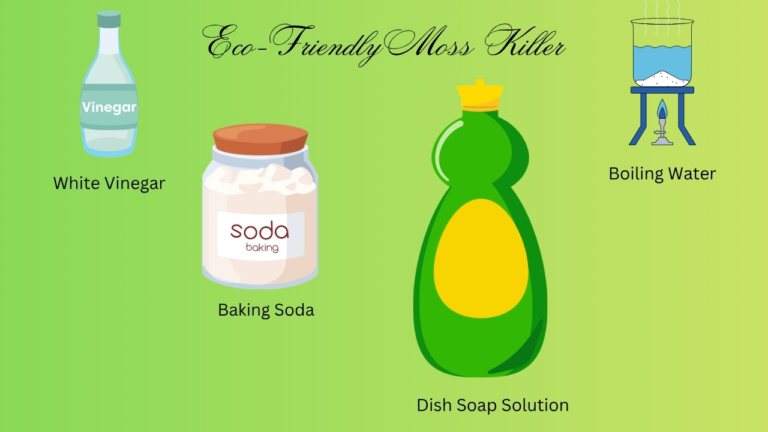
White Vinegar Solution
White vinegar stands as one of the most accessible and effective eco-friendly moss killers for concrete driveways. The acetic acid in vinegar lowers the surface pH dramatically, creating conditions that moss cannot tolerate.
Application Method: Use undiluted white vinegar with 5% acidity for best results. Pour or spray vinegar directly onto moss-covered areas, ensuring complete saturation. For thick moss growth, apply vinegar on a dry, sunny day when rain isn’t forecast for at least 24 hours. The moss will turn brown within hours and can be scrubbed away after 2-3 days.
Effectiveness: Vinegar kills moss on contact but doesn’t prevent regrowth. Multiple applications may be necessary for established colonies. The solution evaporates quickly and breaks down naturally, leaving no harmful residue.
Precautions: While generally safe, vinegar can damage nearby plants if overspray occurs. Apply carefully around garden beds and lawn edges. Vinegar won’t harm cured concrete but may temporarily darken the surface until fully dried.
Baking Soda Treatment
Baking soda (sodium bicarbonate) offers another safe, readily available moss control option. This alkaline substance works by drastically increasing surface pH, creating an inhospitable environment for moss.
Application Method: Mix three tablespoons of baking soda per liter of water, or sprinkle dry baking soda directly onto damp moss. For spray applications, use a garden sprayer to coat moss thoroughly. The powder method works well for small areas—simply scatter baking soda over moss patches and mist lightly with water to activate.
Effectiveness: Baking soda typically requires 2-3 days to kill moss completely. Results appear slower than vinegar but last longer due to the alkaline residue left on the concrete surface. This residual effect provides some regrowth prevention.
Benefits: Completely non-toxic to pets, children, and plants. Won’t stain or damage concrete. Provides a slight deterrent effect against future moss establishment.
Boiling Water
Perhaps the simplest eco-friendly moss killer for concrete driveways involves nothing more than boiling water. The extreme temperature destroys moss cell structures instantly, causing rapid die-off.
Application Method: Boil large quantities of water and pour directly onto moss while still steaming hot. Work in sections, ensuring each area receives thorough coverage. The moss will turn dark brown almost immediately.
Effectiveness: Boiling water provides immediate visible results. Moss dies on contact and can be swept or pressure washed away within hours. However, this method requires repeated applications as it offers no residual protection.
Practical Considerations: Best suited for small to medium-sized moss patches. Large driveway coverage becomes impractical due to the volume of water needed and safety concerns with transporting boiling water outdoors. This method uses no chemicals whatsoever and costs virtually nothing.
Dish Soap Solution
Biodegradable dish soap disrupts moss’s ability to retain moisture, essentially causing it to dry out and die. This method works particularly well when combined with other treatments.
Application Method: Mix 2-3 tablespoons of biodegradable dish soap per gallon of water. Spray the solution onto moss-covered areas, ensuring complete saturation. For enhanced effectiveness, add equal parts white vinegar to create a combination treatment.
Effectiveness: Dish soap alone works slowly, taking 5-7 days to fully kill moss. The soap breaks down the waxy coating on moss leaves, accelerating dehydration. When combined with vinegar, results appear within 2-3 days.
Selection Criteria: Choose plant-safe, biodegradable dish soaps without phosphates, dyes, or synthetic fragrances. These formulations minimize environmental impact while maintaining effectiveness against moss.
Physical Removal Methods
Pressure Washing
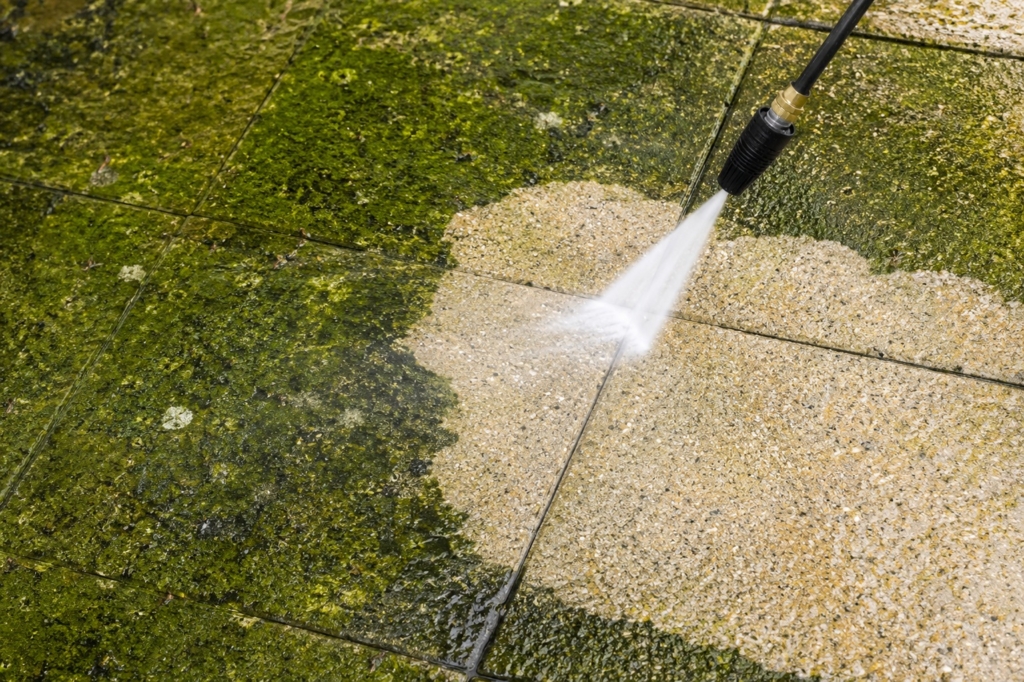
Pressure washing provides the most immediate moss removal for concrete driveways. The high-pressure water stream blasts moss away along with accumulated dirt and organic debris.
Proper Technique: Use a pressure washer rated between 2,000-3,000 PSI for concrete driveways. Hold the wand at a 45-degree angle, maintaining 6-12 inches distance from the surface. Work in overlapping passes to ensure complete coverage. Start with lower pressure settings and increase as needed to avoid concrete damage.
Advantages: Removes moss instantly without chemicals. Cleans the entire driveway surface simultaneously. Provides immediate visual improvement.
Limitations: Pressure washing removes moss but doesn’t kill spores or prevent regrowth. Moss typically returns within months without follow-up treatment. Excessive pressure or poor technique can damage concrete, especially older or deteriorating surfaces.
Manual Scrubbing
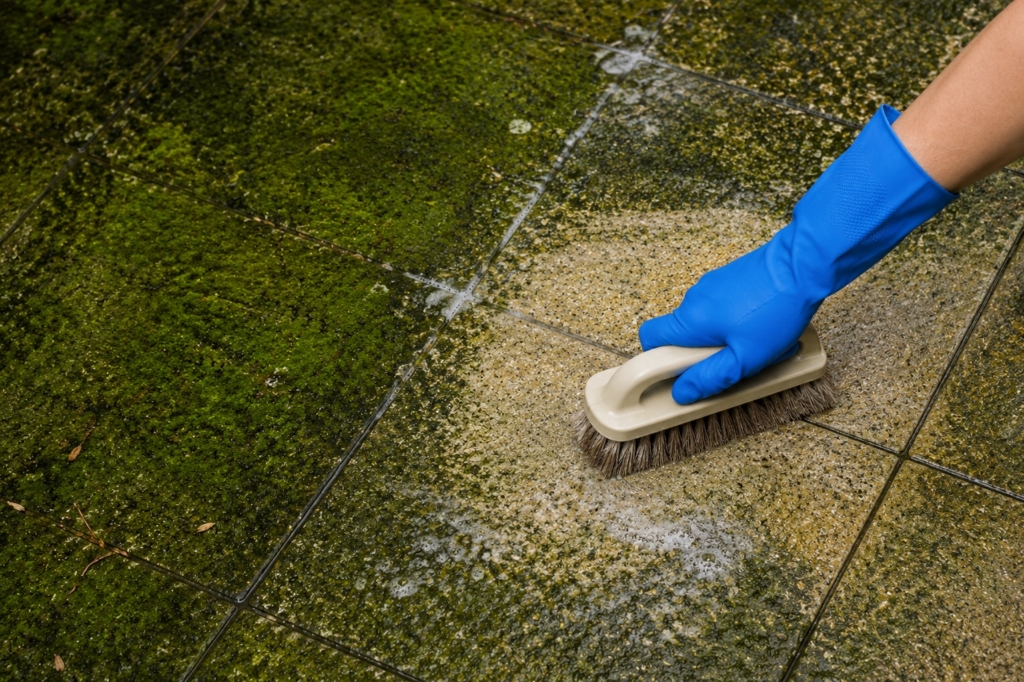
For smaller areas or spot treatment, manual scrubbing offers precise moss control without equipment investment.
Process: After applying an eco-friendly moss killer and allowing time for the moss to die, use a stiff-bristled brush or broom to scrub the dead moss away. A mixture of baking soda and water creates an effective scrubbing paste that simultaneously cleans and prevents regrowth.
Best Practices: Wet the area before scrubbing to prevent dust and make removal easier. Scrub in circular motions, applying moderate pressure. Rinse thoroughly with a garden hose afterward. This method allows careful work around delicate areas like expansion joints and decorative borders.
Long-Term Prevention Strategies
Successful moss control requires more than just killing existing growth. Addressing the underlying conditions that encourage moss prevents recurring problems.
Improve Drainage
Standing water and persistent dampness create ideal moss-growing conditions. Evaluate driveway drainage patterns and correct problem areas.
Solutions: Regrade surrounding soil to direct water away from the driveway. Clear clogged gutters and downspouts that deposit water onto concrete surfaces. Consider installing French drains or channel drains along the driveway edges to manage water flow. Fill low spots or depressions where water pools using self-leveling concrete compound.
Increase Sunlight Exposure
Moss struggles in direct sunlight due to rapid moisture evaporation and UV exposure. Maximizing sun exposure significantly reduces moss growth potential.
Approaches: Trim overhanging tree branches that shade the driveway. Remove or relocate shrubs and plants that block sunlight. Consider thinning tree canopies rather than complete removal to balance shade and moss prevention. Even partial sunlight improvement makes substantial differences in moss growth rates.
Regular Cleaning
Routine maintenance prevents moss spores from establishing colonies. Organic debris like fallen leaves, dirt, and pollen provides nutrients that support moss growth.
Maintenance Schedule: Sweep or blow the driveway weekly during fall when leaf accumulation peaks. Hose down the surface monthly to remove fine organic particles. Apply preventive treatments quarterly using diluted vinegar or baking soda solution, even when moss isn’t visible. These simple practices create an inhospitable environment for moss establishment.
Apply Preventive Treatments
After removing existing moss, preventive applications extend the moss-free period significantly.
Treatment Options: Spray diluted white vinegar (1 part vinegar to 2 parts water) monthly as a preventive measure. This mild solution alters surface pH enough to discourage moss without the harshness needed for killing established growth. Alternatively, sprinkle a thin layer of baking soda across the driveway quarterly and sweep it into the concrete texture.
Seasonal Considerations
Moss control effectiveness varies by season, with timing significantly impacting treatment success.
Spring Treatment
Spring offers ideal conditions for moss removal. Moss actively grows during this season, making it more vulnerable to treatments. Warmer temperatures and longer days accelerate the action of natural moss killers.
Apply eco-friendly treatments in early spring before moss growth accelerates. The moss will have minimal time to recover before summer heat naturally suppresses growth. Follow treatments with thorough cleaning to remove dead moss and spores.
Summer Maintenance
Summer heat and increased sunlight naturally inhibit moss growth on exposed concrete. Use this period for prevention rather than aggressive treatment.
Focus summer efforts on drainage improvements, tree trimming, and regular cleaning. Apply light preventive treatments monthly. Address any shaded areas where moss persists despite seasonal conditions.
Fall Preparation
Fall creates renewed moss-friendly conditions with shorter days, cooler temperatures, and increased moisture from rain. Aggressive prevention becomes crucial.
Remove fallen leaves promptly to prevent the moist layer that encourages moss. Apply stronger treatments in early fall before moss colonies establish. Ensure drainage systems function properly to manage autumn rainfall.
Winter Dormancy
Most moss species slow growth during winter but don’t die. Cold-weather moss treatments face challenges from reduced chemical effectiveness and ice formation.
Wait for above-freezing days for any winter moss treatments. Focus winter efforts on mechanical removal through pressure washing during mild weather. Prepare for spring treatment by addressing drainage issues and planning landscape modifications.
Cost Comparison: Eco-Friendly vs Chemical Solutions
Budget-conscious homeowners often question whether eco-friendly moss killers match chemical alternatives in cost-effectiveness.
Eco-Friendly Solutions:
- White vinegar: $3-5 per gallon (treats 200-300 square feet)
- Baking soda: $2-3 per pound (treats 100-150 square feet)
- Dish soap: $3-4 per bottle (treats 500+ square feet when diluted)
- Boiling water: Essentially free (water and energy costs minimal)
Chemical Moss Killers:
- Commercial products: $15-30 per gallon
- Professional application: $100-300 per driveway
Eco-friendly solutions cost 60-80% less than commercial chemical products. The slight trade-off in convenience is offset by safety, environmental benefits, and significant cost savings. For a typical two-car driveway, annual moss control using eco-friendly methods costs $20-40 versus $100-200 for chemical treatments.
Safety Considerations
While eco-friendly moss killers pose fewer risks than chemical alternatives, proper handling ensures the safest outcomes.
During Application: Wear old clothes that can tolerate splashes and stains. Use gloves when handling vinegar or concentrated solutions to prevent skin irritation. Wear eye protection when spraying to avoid accidental contact. Keep pets and children away from treatment areas until surfaces dry completely.
Surface Protection: Test any new treatment on a small, inconspicuous area first. Some concrete finishes may react unexpectedly to acidic solutions. Cover or wet down adjacent plants before applying treatments near garden beds. Rinse spray equipment thoroughly after use to prevent corrosion.
Common Mistakes to Avoid
Several common errors reduce eco-friendly moss killer effectiveness or create new problems.
Insufficient Coverage: Moss must be thoroughly saturated for treatments to penetrate the entire colony. Surface-only applications kill visible growth while leaving underlying structures intact, resulting in rapid regrowth.
Impatience: Natural treatments work more slowly than harsh chemicals. Expecting overnight results leads to over-application and wasted product. Allow recommended treatment times before assessing effectiveness.
Neglecting Prevention: Killing existing moss without addressing underlying conditions guarantees rapid return. Successful moss control requires both treatment and prevention strategies.
Wrong Timing: Applying treatments before rain washes them away before they take effect. Treating during freezing weather reduces effectiveness significantly. Check weather forecasts and choose dry, mild periods for best results.
Mixing Incompatible Products: While some combinations enhance effectiveness, others neutralize active ingredients. Mixing vinegar (acidic) with baking soda (alkaline) creates a neutral solution that loses moss-killing properties. Apply these treatments separately for best results.
Environmental Impact
Choosing eco-friendly moss killers for concrete driveways extends benefits beyond immediate moss control. These decisions affect local ecosystems, water quality, and wildlife health.
Chemical moss killers contribute to water pollution even in small quantities. Storm water runoff carries these substances directly to waterways without treatment. Accumulated chemicals disrupt aquatic ecosystems, harm beneficial insects, and contaminate soil surrounding the driveway.
Eco-friendly alternatives break down naturally into harmless components. Vinegar converts to water and carbon dioxide. Baking soda is already a mineral found in nature. These substances pose no bioaccumulation risks and don’t persist in the environment.
The choice between chemical and eco-friendly moss control represents more than personal preference—it reflects environmental stewardship and community responsibility.
Conclusion
Effective eco-friendly moss killers for concrete driveways deliver results without compromising environmental health or safety. White vinegar, baking soda, dish soap solutions, and boiling water all successfully eliminate moss when applied correctly. Combined with physical removal methods and prevention strategies, these natural alternatives maintain moss-free driveways year-round.
The key to long-term success lies in addressing root causes rather than just treating symptoms. Improved drainage, increased sunlight exposure, and regular maintenance create conditions where moss struggles to establish. When moss does appear, prompt treatment with eco-friendly solutions prevents small patches from becoming major problems.
Homeowners no longer need to choose between effective moss control and environmental responsibility. Natural alternatives prove that sustainable solutions can match or exceed chemical products in results while providing peace of mind about safety and ecological impact. The small additional effort required for eco-friendly approaches pays dividends in healthier surroundings, lower costs, and lasting moss prevention on concrete driveways.